

 Sneaker Locks
 Sneaker Charms
 Earrings
 Hoodie Strings
 Replace Laces
 Shoelace Belt
 Pants Drawstrings
 Sole Protectors
 Crease Protectors
 Shoebag
 Custom
 4 Pack of Laces (15% Off)
 All Laces
 Leather
 Cement
 Oval
Oval Cotton
 Waxed
Waxed Rope
Rope Off-White
 Rhinestone
 Glow in Dark
 Velvet
 Reflective
 Aglets/Tips
 Tieless
 Vintage Faded
 Thin Rope
 Black
Black White
White Gold
Gold Red
Red Blue
Blue Yellow
 Green
Green Purple
 Orange
 Pink
Pink Rose Gold
 Brown
Brown Grey
Grey Other
Other Adidas
 Air Jordan
 Asics
Asics Balenciaga
 Cole Haan
 Converse
 Doc Marten
 New Balance
 Off White
 Puma Fat
 Stan Smith
 Reebok
 Vans
Vans Yeezy
Yeezy Basketball
 Boot
Boot Dress
Dress Fashion
 Golf
Golf Hiking
 Skateboarding
 Soccer
 Running
Lacing up your hockey skates might seem straightforward, but getting it right can dramatically impact your performance on the ice. Properly laced skates ensure the support and comfort needed to excel in your game. Whether you’re a seasoned pro or a newcomer, here’s a comprehensive guide on how to lace hockey skates effectively, with various methods tailored to your needs and personal preferences.
1. The Standard Lacing
The Standard Lacing method is the most common technique for lacing hockey skates. It provides a balanced fit that offers comfort and support, suitable for players of all skill levels.
Standard Lacing involves crisscrossing the laces through each pair of eyelets, starting from the bottom and working your way up to the top. This method evenly distributes pressure across your foot, reducing the risk of discomfort or injury. It keeps your skates snug without being overly tight, which is crucial for optimal performance.
Steps to Standard Lacing
-
Prepare Your Skates: Ensure they are dry and the laces are in good condition. Old or worn-out laces can break easily.
-
Start at the Bottom: Thread the lace through the bottom eyelets from the outside in. Pull the lace ends evenly.
-
Crisscross the Laces: Thread the right lace through the next eyelet on the left side, and the left lace through the right side.
-
Repeat Crisscross Pattern: Continue crisscrossing the laces up the skate, alternating sides.
-
Adjust Tightness: Ensure each section of the lace is snug but not overly tight.
-
Finish at the Top: Tie a secure knot and double-knot for added security.
-
Check the Fit: Walk around to ensure comfort and adjust if needed.
The Standard Lacing method is reliable and ensures you have the support needed for peak performance.
2. The Over-Under Lacing
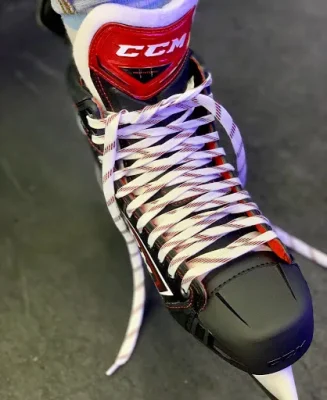
The Over-Under Lacing technique helps you control tightness and comfort by alternating between threading the laces over and under the eyelets. This method is excellent for distributing pressure more evenly.
By threading the laces over and under the eyelets, the Over-Under Lacing method balances pressure and enhances comfort. It is particularly useful for reducing pressure points and improving fit.
Steps to Over-Under Lacing
-
Prepare Your Skates: Ensure they are dry and the laces are in good condition.
-
Start at the Bottom: Thread the lace through the bottom eyelets from the outside in.
-
First Over: Cross the right lace over to the left side, threading it through the eyelet from the outside in. Repeat with the left lace.
-
Under the Next: For the next eyelets, thread each lace under and out through the opposite eyelet.
-
Repeat Pattern: Continue alternating between over and under as you move up the skate.
-
Adjust Tightness: Periodically check and adjust the tightness.
-
Finish at the Top: Tie a secure knot and double-knot for added security.
-
Check the Fit: Walk around to ensure comfort and adjust if needed.
The Over-Under Lacing method provides a balanced and customizable fit for enhanced comfort.
3. The Lock Lacing
Lock Lacing provides extra ankle support and stability, ideal for players needing a secure fit around the ankle. This method creates a “lock” near the top eyelets to prevent laces from loosening during play.
Lock Lacing threads the laces through the top eyelets to create a loop, effectively locking them in place. It prevents unwanted movement and provides a snug fit around the ankle.
Steps to Lock Lacing
-
Prepare Your Skates: Ensure they are dry and the laces are in good condition.
-
Start at the Bottom: Thread the lace through the bottom eyelets from the outside in.
-
Crisscross Up the Skate: Use the standard crisscross method until the second-to-last eyelets.
-
Create the Lock Loop: Thread each lace straight up through the top eyelet on the same side to create a loop.
-
Cross the Laces: Thread each lace end through the loop on the opposite side and pull tight.
-
Finish the Lacing: Tie a secure knot and double-knot for added security.
-
Check the Fit: Walk around to ensure comfort and adjust if needed.
Lock Lacing enhances ankle support and stability, ensuring your skates stay snug and secure.
Lock in Style and Support with Loop King’s Oval Shoe Laces


Lock lacing can be even more effective with high-quality laces, and that’s where Loop King Laces come in. Their durability and perfect length make them ideal for creating a secure lock around your ankle. Plus, the sleek design and variety of colors can add a touch of style to your skates. Just replace your old laces with Loop King Laces and follow the lock lacing method for a snug, supportive fit that helps you stay confident on the ice.
4. The Double Cross Lacing
The Double Cross Lacing method adds extra support by doubling up on the crisscross pattern around the ankle area, providing a tighter, more supportive fit.
This method involves an additional cross at the middle of the skate to provide extra stability. It’s perfect for players needing additional ankle support.
Steps to Double Cross Lacing
-
Prepare Your Skates: Ensure they are dry and the laces are in good condition.
-
Start at the Bottom: Thread the lace through the bottom eyelets from the outside in.
-
Begin Crisscross Lacing: Use the standard crisscross method until the middle of the skate.
-
Double Cross: Cross the laces over each other twice in the middle before threading them through the next eyelet.
-
Continue Crisscross: Resume the standard crisscross pattern up to the top.
-
Finish at the Top: Tie a secure knot and double-knot for added security.
-
Check the Fit: Walk around to ensure comfort and adjust if needed.
The Double Cross Lacing method provides enhanced ankle support and stability.
5. The Parallel Lacing
Parallel Lacing runs the laces horizontally across the eyelets, providing a unique fit that distributes pressure more evenly. It’s ideal for players with sensitive feet or those looking to reduce pressure points.
By avoiding the traditional crisscross pattern, Parallel Lacing minimizes pressure on the top of the foot, offering a more comfortable and balanced fit.
Steps to Parallel Lacing
-
Prepare Your Skates: Ensure they are dry and the laces are in good condition.
-
Start at the Bottom: Thread the lace through the bottom eyelets from the outside in.
-
Thread Horizontally: Thread one lace end horizontally through the next eyelet on the same side, then switch sides.
-
Switch Sides: Thread each lace end through the opposite eyelet, moving straight up.
-
Continue Pattern: Repeat horizontal threading, alternating sides.
-
Finish at the Top: Tie a secure knot and double-knot for added security.
-
Check the Fit: Walk around to ensure comfort and adjust if needed.
Parallel Lacing provides a comfortable fit by reducing pressure points.
6. The Elastic Lacing
Elastic Lacing offers flexibility and convenience with stretchable laces, allowing for a comfortable and adaptable fit that accommodates natural foot movements.
Elastic laces stretch and contract with your foot’s movement, reducing pressure points and eliminating the need for constant adjustments.
Steps to Elastic Lacing
-
Prepare Your Skates: Ensure they are dry and the elastic laces are in good condition.
-
Start at the Bottom: Thread the elastic lace through the bottom eyelets from the outside in.
-
Begin Crisscross Lacing: Use the standard crisscross method.
-
Adjust Tension: Pull on the elastic laces to adjust the tension, ensuring a snug but comfortable fit.
-
Continue Crisscross Lacing: Repeat until you reach the top eyelets.
-
Secure the Laces: Tie a secure knot and use any locking mechanisms or clips if available.
-
Check the Fit: Walk around to ensure comfort and adjust if needed.
Elastic Lacing offers a flexible and convenient solution for a secure and comfortable fit.
Enhancing Elastic Lacing with Loop King’s 72 Inch Shoelaces


While elastic laces provide convenience, combining them with Loop King Laces ensures durability and style. Loop King Laces offer the perfect blend of stretch and strength, allowing you to enjoy the benefits of elastic lacing without sacrificing quality. Plus, their premium materials and stylish designs add a touch of elegance to your hockey skates. Upgrade to Loop King Laces for a hassle-free and chic skating experience.
7. The Wide Foot Lacing
Wide Foot Lacing is designed for players with wider feet by skipping certain eyelets to create more room, alleviating pressure on the sides of the foot.
This method adjusts the lacing pattern to provide a more comfortable fit for wider feet, reducing pressure points and enhancing overall comfort.
Steps to Wide Foot Lacing
-
Prepare Your Skates: Ensure they are dry and the laces are in good condition.
-
Start at the Bottom: Thread the lace through the bottom eyelets from the outside in.
-
Skip Eyelets: Skip every other eyelet to create a wider gap between the laces.
-
Continue Skipping: Repeat the skipping pattern up the skate, ensuring an even fit.
-
Adjust Tightness: Ensure the laces are snug but comfortable.
-
Finish at the Top: Tie a secure knot and double-knot for added security.
-
Check the Fit: Walk around to ensure comfort and adjust if needed.
Wide Foot Lacing offers a customized fit for players with wider feet, enhancing comfort and performance.
Conclusion
Lacing your hockey skates properly is essential for maximizing comfort and performance. Whether you’re using the Standard Lacing, Over-Under Lacing, Lock Lacing, Double Cross Lacing, Parallel Lacing, Elastic Lacing, or Wide Foot Lacing, each method provides unique benefits tailored to different needs and preferences. Experiment with these techniques to find the perfect fit for your skating style and personal preference.
For an even better fit and added style, consider using high-quality waxed laces or Loop King Laces, which provide durability and a secure hold, enhancing your overall skating experience.

Miles Anthony Smith
Miles is a loving father of 3 adults, devoted husband of 24+ years, co-chief sneakerhead (along with his wife Carolyn) at Loop King Laces, author, entrepreneur, investor, & owner of several businesses (AmaLinks Pro, Why Stuff Sucks, & Kompelling Kars). Miles has been featured in New York Magazine, Escapist Magazine, FashionSpot, Menswear Style, & Men Style Fashion. Loop King is trusted by sneakerheads JumperMan Kris, jumpmanbostic, ajinchicago, among others.


OFF-WHITE “SHOELACES”
Gold Tip Shoelaces
BROWSE LEATHER LACES
Gold Tip Shoelaces
BROWSE ROPE LACES
Gold Tip Shoelaces
BROWSE FLAT WAXED LACES
Gold Tip Shoelaces